Tallow vs Shea Butter for Skin: An Honest Comparison
Share
The short version: Tallow and shea butter are both rich, natural moisturisers, and either one can do a good job. The practical difference is feel. Grass-fed tallow has a fatty-acid profile close to your skin's own oils, so for a lot of people it sinks in and disappears. Shea butter is a plant butter that tends to sit a little heavier and longer on top of the skin. Neither is universally "better" — it comes down to your skin and what you want from it.
If you've been weighing up a tallow moisturiser against a shea-based one, here's an honest look at how they actually differ. No winner declared in advance.
What they are
Tallow is rendered beef fat. The good stuff is made from grass-fed suet (the firm fat around the kidneys), which renders down clean and pale. Ours is sourced from grass-fed cattle in New Zealand and made up here in Australia.
Shea butter comes from the nut of the African shea tree. It's a plant fat, solid at room temperature, and a long-standing staple in natural skincare. If you follow a vegan routine, shea is the obvious pick of the two — tallow is an animal product, full stop.
How they feel on skin
This is where most people notice the difference.
Tallow
Because tallow's lipids are similar to the oils your skin already makes, it tends to absorb rather than sit. Applied to slightly damp skin, a small amount melts in and most people are dry to the touch within a few minutes. It feels like a moisturiser, not a coating.
Shea butter
Shea is a heavier, more occlusive butter. It forms a longer-lasting layer on the surface, which is great for very dry, rough spots — heels, elbows, knuckles — but on the face some people find it greasy or slow to absorb, especially in its raw, un-whipped form.
Which suits which skin
There's no rule here, but some general patterns:
- Facial use, daily: A lot of people prefer tallow for the face simply because it feels lighter and absorbs faster.
- Very dry body patches: Shea's heavier finish can be an advantage where you want a thick, lasting barrier.
- Sensitive skin: Both are simple, low-ingredient options. As always, patch test first — dab a pea-sized amount on your inner forearm and leave it 24 hours before using it on your face.
- Vegan routine: Shea, no contest. Tallow is an animal fat.
Many people with dry or easily-irritated skin find a simple fat like tallow or shea sits better than a long ingredients list. That's a preference, not a promise — your skin gets the final say.
What about ingredients lists?
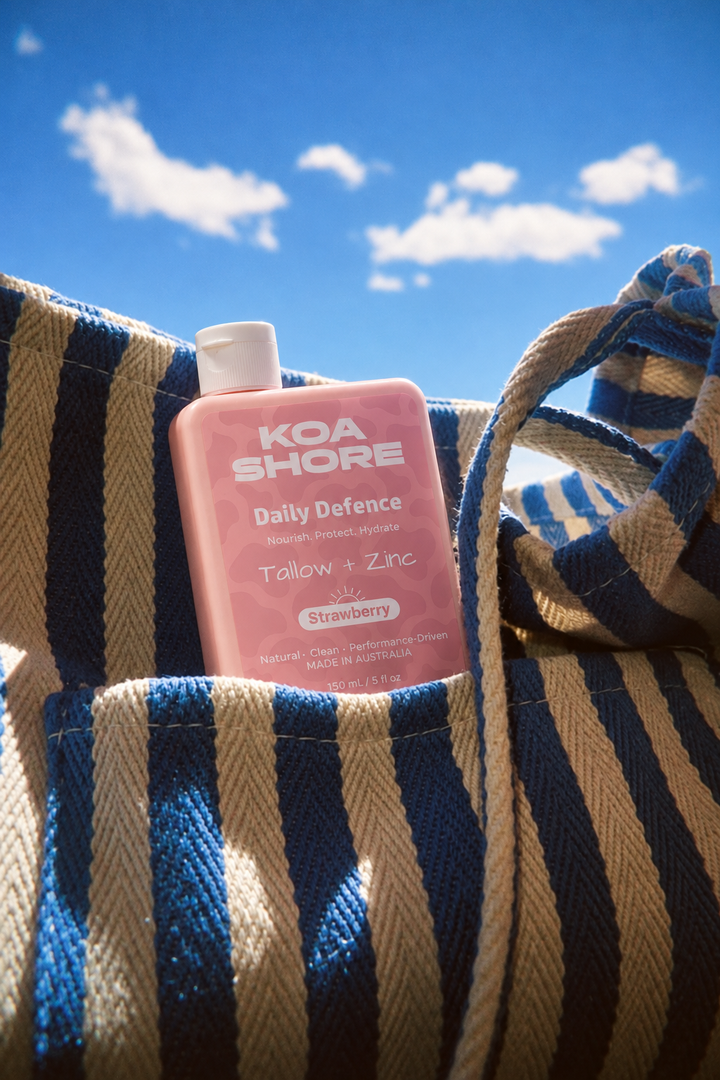
One reason people reach for either of these is that they're trying to simplify. A good tallow moisturiser or a good shea balm can be a very short ingredients list. Our Daily Defence pairs grass-fed tallow with non-nano zinc oxide and a handful of supporting oils — and we list all 15 ingredients so you can read exactly what's in it. If you're comparing products, a brand that hides its full list is worth a second look.
So, which should you pick?
If you want something that feels close to weightless on the face and absorbs fast, tallow is worth a try. If you want a thicker, plant-based butter for stubborn dry patches — or you keep a vegan routine — shea is the better fit. Plenty of people use both for different jobs.
For what it's worth, we built around tallow because of how closely it matches skin's own oils, and paired it with non-nano zinc for a simple two-hero formula. You can read more about why we chose grass-fed tallow and what goes into the bottle.
Key takeaways
- Both tallow and shea butter are rich, natural moisturisers — neither is universally better.
- Tallow tends to absorb fast and feel light; shea sits heavier and longer.
- Tallow's fats are close to skin's own oils; shea is a plant butter.
- Shea wins if you keep a vegan routine; tallow is an animal product.
- Patch test either one before regular use, especially on sensitive skin.
FAQ
Is tallow or shea butter better for the face?
Many people prefer tallow on the face because it absorbs faster and feels lighter. Shea can feel heavier, though whipped shea is lighter than raw. It comes down to your skin and preference.
Can I use tallow and shea butter together?
Yes. Some people use a lighter tallow moisturiser on the face and a heavier shea balm on very dry body areas. They don't conflict.
Is shea butter better for sensitive skin than tallow?
Both are simple, short-ingredient options that many people with sensitive skin get on well with. Neither is guaranteed to suit you — patch test first and stop if you see irritation.
Does tallow clog pores more than shea?
We cover this in detail in our piece on whether beef tallow is comedogenic. The short answer is that it varies person to person — patch testing is the honest way to find out.
Daily Defence — grass-fed tallow and non-nano zinc in one simple bottle. Shop Daily Defence.
Related reading
The Tallow + Zinc Honest Australian Guide
Tallow vs Coconut Oil for Skin: An Honest Comparison
Is Beef Tallow Comedogenic? Will It Clog Your Pores?
Grass-Fed Tallow for Skin: Does It Actually Work?