Why grass-fed tallow
Rich in care.Light on skin.
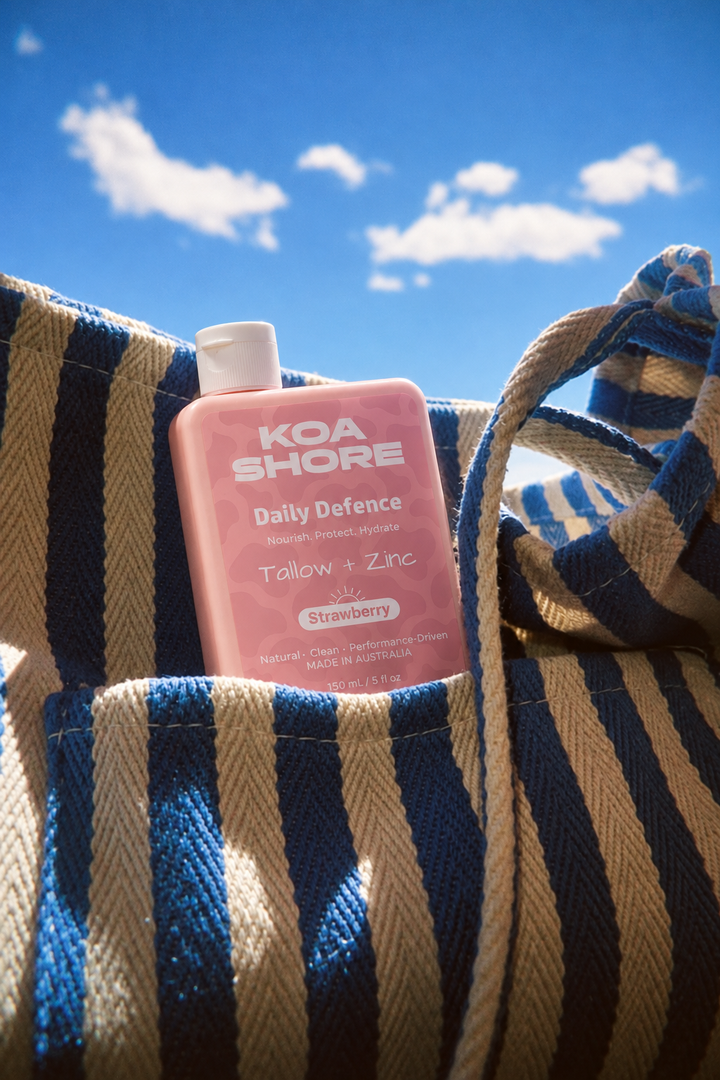
Grass-fed tallow and non-nano zinc, brought together in a light cream for face and body. This is Daily Defence.
Find your scent See the real texture
Why we chose it
A little nourishment.
A simpler routine.
Tallow is rendered beef fat. We use grass-fed tallow from New Zealand as one of the five key ingredients in Daily Defence.
Tallow for softness.
An emollient ingredient that helps skin feel soft and nourished.
Zinc for the mineral barrier.
Non-nano zinc oxide makes up 14% of Daily Defence, alongside tallow and the supporting ingredients.
A cream for everyday.
Water, MCT oil and the emulsifier system give Daily Defence its light, spreadable consistency.
The real texture
See how it feels.
A light, flowing cream. Easy to smooth over face and body.
Grass-fed tallow is blended with water, MCT oil and an emulsifier system to create the texture you see here. Nourishing skincare that fits into your morning.
- 01Start with a small amount on clean, dry skin.
- 02Smooth evenly over your face and body.
- 03Allow it to settle before getting dressed.
From ingredient to bottle
Good ingredients.
Made with care.
Where our tallow comes from.
Our tallow comes from grass-fed cattle in New Zealand. It is animal-derived, so Daily Defence is not vegan.
Where Daily Defence is made.
Blended and filled in Australia. Koa Shore is based in Ocean Grove, on Victoria’s Bellarine Peninsula.
Before you choose.
Is it a thick tallow balm?
Daily Defence is a flowing cream, made with tallow, water and supporting ingredients. The video above shows the actual consistency.
What does it smell like?
Choose Coconut & Lime or Strawberry. Both use IFRA-compliant fragrance at less than 1% to give each scent its character.
What if my skin is sensitive?
Skin is individual. Check the full ingredients and patch test before use, particularly if you are sensitive to fragrance.
Does it have an SPF rating?
Daily Defence is cosmetic skincare with a mineral barrier. It is not a registered sunscreen and has no SPF rating.
Daily Defence
Your daily care.
Your favourite scent.
Coconut & Lime or Strawberry. Two scents, the same five key ingredients.