Low-Tox Skincare in Australia: How to Actually Read a Moisturiser Label
Share
"Low-tox" and "clean" aren't regulated terms — any brand can print them. So the honest version of low-tox skincare isn't a word on the front; it's what's on the back, and whether the brand lists all of it. Here's how to actually read a moisturiser label.
"Clean" and "low-tox" mean… not much, legally
There's no Australian standard for "clean," "low-tox," "non-toxic" or "chemical-free." They're marketing words (everything is a chemical — water is a chemical). Useful as a vibe, useless as proof. Judge the label, not the adjective.
Read the ingredient list like this
- Order = quantity. Ingredients are listed most to least. If water and fillers are at the top and the "hero" is near the bottom, that tells you something.
- Length is a signal. A 25-ingredient moisturiser isn't automatically bad — but a short list you can mostly pronounce is easier to trust.
- Find the actives, not the marketing. What's actually doing the work?
Ingredients worth recognising
A few you'll see on a simple moisturiser, and what they do: tallow (mirrors your skin's own oils, absorbs in), non-nano zinc oxide (a physical mineral ingredient — not a sunscreen), MCT oil (light, fast absorption) and vitamin E (keeps the oils stable). Short, recognisable, each doing a job.
The real test: do they list everything?
The brands worth trusting list every ingredient — not just the nice-sounding ones. That's the whole reason we publish all of ours and wrote about why we list all 15. If a brand won't show you the full list, that's your answer.
So what's "low-tox" really?
Fewer ingredients, ones you recognise, and full transparency — not a word on the front of the bottle.
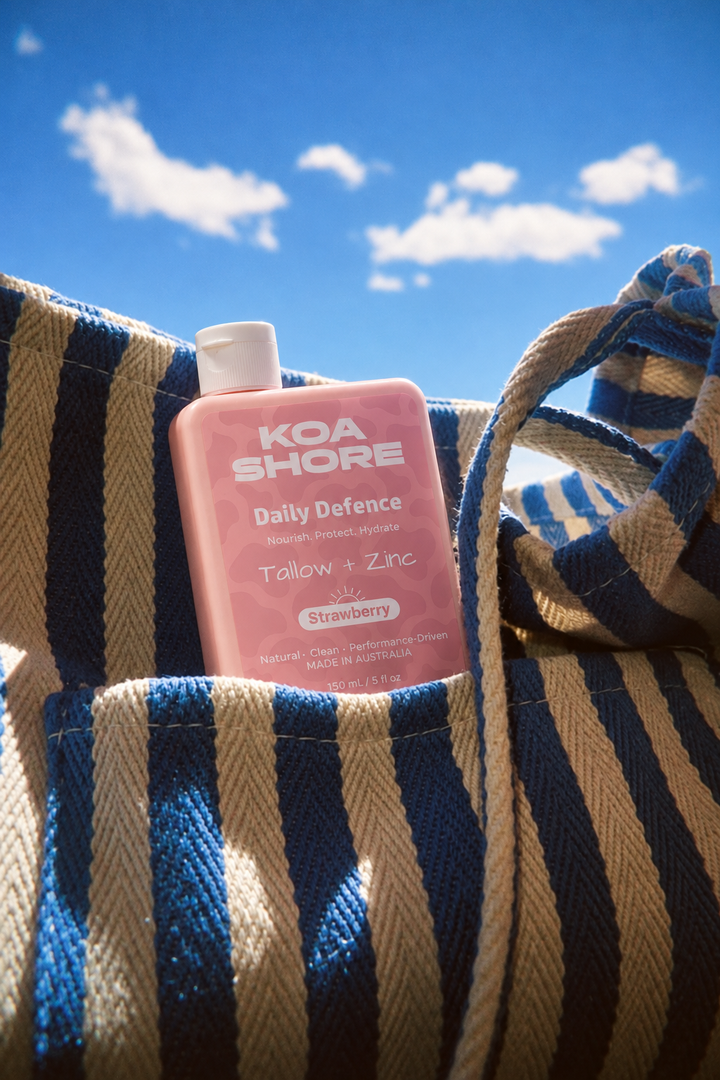
Koa Shore Daily Defence — grass-fed tallow + non-nano zinc, every ingredient listed. One bottle, face and body. Shop Daily Defence. See the full ingredient list or the Tallow + Zinc Guide.